Last updated on at 11:19 am
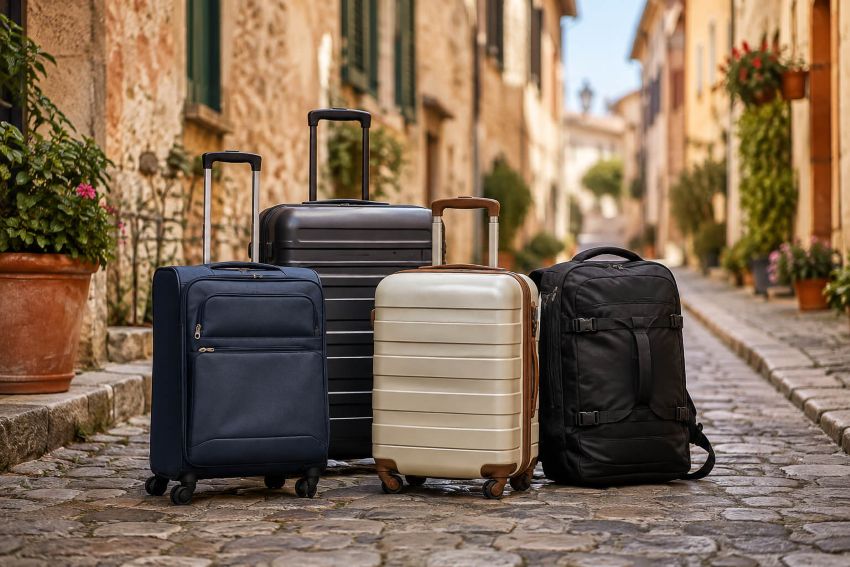
Planning a trip to Europe? Before you start daydreaming about croissants in Paris, pasta in Rome, or wandering through tiny medieval streets in Portugal, there is one surprisingly important decision to make: your luggage.
Choosing the best carry-on luggage for European travel is a little different from choosing a suitcase for a typical domestic trip. Europe means more trains, more stairs, smaller elevators, uneven sidewalks, cobblestones, and plenty of situations where you may find yourself dragging your suitcase farther than you originally planned.
And then there are the airlines.
European budget airlines can have much stricter cabin-bag rules than many travelers are used to. A suitcase that is perfectly acceptable on one airline may be too large for another. That is why buying the biggest carry-on you can find is not necessarily the smartest strategy.
The good news is that there are plenty of excellent carry-on suitcases that make European travel much easier.
Here are some of the best carry-on luggage options for European travel, plus what to look for before you buy.
This post may contain affiliate links that may earn me a commission, at no additional cost to you, if you buy via them. As an Amazon Associate, I earn from qualifying purchases. Please see our Disclosure for more info.
What Is the Best Carry-On Luggage for European Travel?
For most travelers, the best carry-on luggage for European travel should be lightweight, compact, durable, easy to maneuver, and sized appropriately for the airlines you plan to use.
My top overall choice is the Travelpro Maxlite 5 International Carry-On Spinner because it offers a useful combination of low weight, practical organization, maneuverability, and international-friendly dimensions.
If you prefer a premium suitcase, the Briggs & Riley Baseline Global 21 is an excellent choice. For travelers who want an exceptionally lightweight hard-shell suitcase, the Samsonite C-Lite Spinner 55/20 is worth considering.
For travelers who prefer a backpack rather than a wheeled suitcase, the Osprey Farpoint 40 is another popular option for European trips.
The important thing is to choose based on your itinerary rather than simply buying the suitcase with the largest capacity.
The Best Carry-On Luggage for European Travel at a Glance
| Carry-On | Best For | Type |
|---|---|---|
| Travelpro Maxlite 5 International Spinner | Best overall | Softside spinner |
| Briggs & Riley Baseline Global 21 | Best premium option | Softside spinner |
| Samsonite C-Lite Spinner 55/20 | Best lightweight hard-shell | Hardshell spinner |
| Travelpro Maxlite 5 International Rollaboard | Best for cobblestones | Softside two-wheel |
| Osprey Farpoint 40 | Best backpack | Travel backpack |
| Samsonite Freeform Carry-On | Best hard-shell value | Hardshell spinner |
| A compact 55 x 40 x 20 cm carry-on | Best for budget airlines | Spinner or softside |
Because luggage specifications and airline policies can change, always check the airline’s current baggage rules before flying. A suitcase marketed as “international carry-on” does not necessarily meet every airline’s requirements.
1. Travelpro Maxlite 5 International Carry-On Spinner
Best overall carry-on for European travel
The Travelpro Maxlite 5 International Carry-On Spinner is one of the easiest bags to recommend for a European trip.


It measures 21.75 x 15.75 x 7.75 inches, including wheels and handles, weighs 5.3 pounds, and has a listed capacity of 39 liters. Travelpro specifically describes it as designed to meet the published carry-on size restrictions of many international airlines.
That combination is particularly useful when you’re traveling between multiple European countries.
It has four spinner wheels, which make it easy to maneuver through airports, train stations, and hotel lobbies. It also has an adjustable handle, exterior pockets, interior organization, compression straps, and an expandable design.
The expansion feature is convenient, but there is an important catch: expanding your suitcase increases its depth, which can take it beyond an airline’s permitted dimensions.
So, think of the expansion zipper as an emergency feature rather than permission to pack like you’re moving permanently to Europe.
Why I like it
- Lightweight at 5.3 pounds
- Four-wheel spinner design
- 39-liter capacity
- Useful interior organization
- Exterior pockets
- Water- and stain-resistant fabric
- Expandable design
- Designed with international airline restrictions in mind
Best for
Travelers taking a one- to two-week European trip who want a traditional rolling suitcase that is relatively lightweight and easy to maneuver.
2. Briggs & Riley Baseline Global 21
Best premium carry-on luggage for European travel
If you travel frequently and are willing to spend more on luggage, the Briggs & Riley Baseline Global 21 is a serious contender.

The suitcase measures 21 x 15 x 9 to 11.5 inches and weighs 9.9 pounds. Its capacity ranges from 37 to 49 liters depending on whether it is expanded.
Its standout feature is Briggs & Riley’s CX expansion and compression system. You can expand the suitcase to create additional packing space, then compress it back down when you need to meet airline size requirements.
The bag also has an exterior-mounted handle, which creates a flatter packing surface inside the suitcase.
That is a small detail, but anyone who has ever packed a suitcase only to discover that the handle mechanism has created a mysterious canyon through the middle of their clothes will appreciate it.
The big drawback is weight. At 9.9 pounds empty, this suitcase leaves less of your airline’s weight allowance for clothes and shoes than a lightweight alternative.
Why I like it
- Premium construction
- Expandable and compressible
- Excellent interior packing space
- Exterior-mounted handle
- 37 to 49 liters of capacity
- Four-wheel spinner design
- Designed for frequent travelers
Best for
Frequent travelers who prioritize durability and premium construction over having the lightest possible suitcase.
3. Samsonite C-Lite Spinner 55/20
Best lightweight hard-shell carry-on
If your ideal European travel suitcase is lightweight, sleek, and hard-sided, take a look at the Samsonite C-Lite Spinner 55/20.
The Samsonite Philippines listing gives the suitcase dimensions as 55 x 40 x 20 cm, with wheels included, and a weight of just 1.9 kg. It has a listed capacity of 36 liters.
That low empty weight is one of its biggest advantages.
Why does weight matter?
Because airlines can impose weight limits even when your suitcase meets their size requirements. Lufthansa, for example, currently lists an 8 kg maximum for its standard carry-on on many routes and fares.
Starting with a suitcase that weighs less than 2 kg gives you significantly more room for your actual belongings.
The C-Lite uses Samsonite’s Curv material, which the company describes as lightweight and impact-absorbing.
Why I like it
- Extremely lightweight
- Hard-shell construction
- 55 x 40 x 20 cm dimensions
- 36-liter capacity
- Four-wheel spinner design
- Good choice for travelers concerned about airline weight limits
Best for
Travelers who want a lightweight hard-shell suitcase and are willing to pay for a premium luggage option.
Another great pick: Samsonite Hard-Sided Lightweight Carry-On

4. Travelpro Maxlite 5 International Carry-On Rollaboard
Best two-wheel carry-on for cobblestone streets
There is a strong argument for choosing a two-wheel suitcase when you’re traveling around Europe.
Four-wheel spinners are wonderful on smooth airport floors. They glide around like tiny obedient shopping carts.
Then you encounter cobblestones.
Suddenly, those beautiful little wheels seem to have entered a personal disagreement with the road.
The two-wheel Travelpro Maxlite 5 International Carry-On Rollaboard is worth considering if you expect to spend a lot of time on uneven sidewalks and streets.
It has the same overall dimensions as the International Spinner, 21.75 x 15.75 x 7.75 inches, but weighs 5.4 pounds and has a listed capacity of 45 liters.
Its two-wheel design can be easier to pull over rougher surfaces than a typical spinner.
Why I like it
- 45-liter capacity
- Relatively lightweight
- Two-wheel design
- Good for uneven surfaces
- Expandable
- Useful organization
- International-oriented dimensions
Best for
Travelers who expect to walk frequently with their luggage, particularly on uneven streets and sidewalks.
Another great pick: Travelpro Platinum Elite Carry-On

5. Osprey Farpoint 40
Best carry-on backpack for European travel
Not everyone wants a suitcase.
If your European itinerary involves lots of trains, stairs, budget hotels, hostels, or frequent changes of location, a travel backpack can make life considerably easier.
The Osprey Farpoint 40 is one of the better-known travel backpacks in this category.
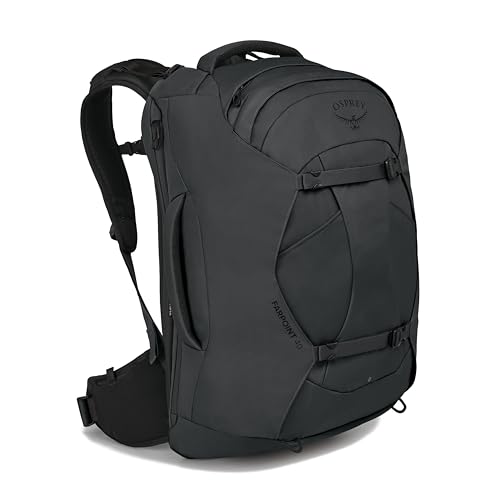
Instead of dragging a suitcase behind you, you can carry the bag on your back while keeping both hands free.
That can be particularly useful when you’re navigating a busy train station with a coffee in one hand, your phone in the other, and approximately 17 seconds to find your platform.
A backpack also eliminates the problem of wheels getting caught in cobblestones.
The downside is obvious: you have to carry the thing.
For some travelers, that is completely fine. For others, the thought of carrying 10 kilograms of clothing on their back through a train station sounds like an excellent way to reconsider their entire vacation.
Why I like it
- Hands-free travel
- Excellent for trains and stairs
- No wheels to worry about
- Useful for one-bag travel
- Easier to store in some small spaces
Best for
Light packers, backpack travelers, and people moving between several European destinations.
6. Samsonite Freeform Carry-On
Best for travelers who prefer a hard-shell suitcase
If you like the structure and protection of a hard-shell suitcase but don’t necessarily want to spend premium-luggage prices, Samsonite has several carry-on options worth considering.
The Freeform collection is particularly appealing if you like a modern hard-shell design and spinner wheels.

The biggest thing to watch with any hard-shell suitcase is the actual exterior dimensions, including wheels and handles.
A suitcase that looks compact in a product photograph can be considerably larger once you include all the bits that actually count toward the airline’s size limit.
Before buying, compare the manufacturer’s published dimensions with the specific airline you plan to fly.
Why I like hard-shell luggage
- Protects belongings from external pressure
- Easy to wipe clean
- Maintains its shape
- Spinner wheels make it easy to maneuver
- Often has a built-in combination lock
Best for
Travelers who prefer hard-shell luggage and want a practical suitcase for European vacations.
7. A Compact 55 x 40 x 20 cm Carry-On
Best option for travelers using strict budget airlines
If you’re planning to fly with several European low-cost carriers, suitcase dimensions should probably be one of your first considerations.
Ryanair, for example, lists a 55 x 40 x 20 cm cabin bag for passengers who have purchased its Priority and 2 Cabin Bags option.

That 20 cm depth is particularly important.
Many popular international carry-ons are approximately 23 cm deep. That may work perfectly well on one airline but exceed the limit on another.
If your itinerary includes a carrier with a 55 x 40 x 20 cm maximum, look specifically for luggage that meets those measurements with the wheels and handles included.
This is one situation where smaller can genuinely be better.
Why European Travel Requires Different Luggage
A suitcase that works beautifully for a road trip through the United States isn’t necessarily the best luggage for European travel.
Europe tends to involve more movement.
You might fly into London, take a train to Paris, catch another train to Amsterdam, fly to Rome, and then spend an afternoon walking over historic streets to your hotel.
Your luggage has to cope with all of that.
Trains
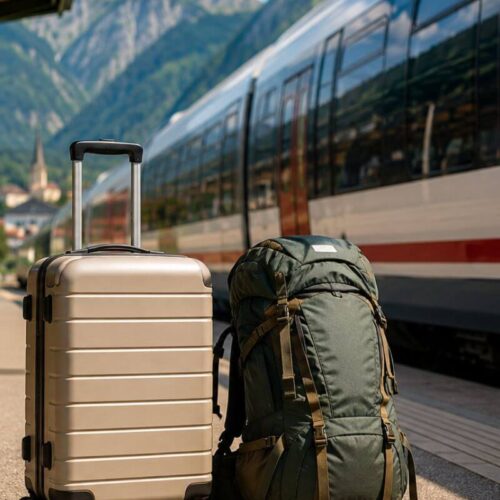
European train travel can be wonderfully convenient, but you’re still responsible for getting your luggage onto the train and finding somewhere to put it.
A compact suitcase is much easier to manage than an enormous checked bag.
Related Read: Europe by Train Itinerary for 2 Weeks – The Ultimate 14-Day Rail Adventure
Cobblestones
Historic city centers often have uneven surfaces. Wheels that perform beautifully on smooth floors can struggle on rough pavement.
Stairs
Not every train station, metro station, or hotel has a conveniently placed elevator.
A lighter suitcase is much easier to lift when you encounter stairs.
Small hotel rooms
Many European hotel rooms are compact. A huge suitcase can become an obstacle course.
If your luggage is small enough to tuck beside the bed or stand upright in a corner, you’ll have more usable floor space.
Multiple destinations
If you’re visiting several countries, you don’t want to repack a giant suitcase every couple of days.
A well-organized carry-on encourages you to pack less and move more easily.
What Size Carry-On Is Best for Europe?
There isn’t one universal European carry-on size.
This is one of the most important things to understand before purchasing luggage.
Airlines set their own baggage limits, and the allowance can also depend on your fare, route, and aircraft.
For example, Lufthansa currently lists a carry-on maximum of 55 x 40 x 23 cm and 8 kg for its applicable economy carry-on allowance.
easyJet’s current rules allow a free small under-seat bag measuring up to 45 x 36 x 20 cm. A larger cabin bag can measure up to 56 x 45 x 25 cm, but the larger bag generally needs to be purchased or included with the fare or membership.
Ryanair’s rules are different again, with its Priority and 2 Cabin Bags option allowing a 55 x 40 x 20 cm cabin bag.
That is why there is no single suitcase that can honestly be described as guaranteed to fit every European airline.
A useful rule of thumb
If you’re trying to maximize compatibility with stricter European airlines, look for a compact carry-on around:
55 x 40 x 20 cm or smaller
Just remember that going smaller can mean sacrificing some packing capacity.
Should You Choose a 20-Inch or 22-Inch Carry-On?
For European travel, I generally prefer a smaller international-style carry-on over a larger 22-inch suitcase.
A 20-inch suitcase is often easier to fit into stricter airline sizers and easier to maneuver through crowded streets and train stations.
A 22-inch suitcase can provide more packing room, but that extra space isn’t particularly useful if the airline decides your suitcase needs to travel in the cargo hold.
When shopping, don’t rely solely on the “20-inch” or “22-inch” label.
Luggage manufacturers don’t all use exactly the same sizing conventions.
Instead, check the actual exterior measurements.
Spinner vs. Two-Wheel Luggage for Europe
This is one of the most interesting luggage debates.
Four-wheel spinner
Four-wheel luggage is fantastic for airports, train stations, shopping centers, and smooth sidewalks.
You can push it beside you instead of dragging it behind you, and you can rotate it easily in tight spaces.
For most travelers, this is the easiest style to use.
Two-wheel luggage
Two-wheel luggage has larger wheels that are often better suited to rough surfaces.
It also tends to have better clearance between the suitcase body and the ground.
That can be helpful when you’re rolling along uneven pavement.
Which should you choose?
If your trip is primarily airports, trains, hotels, and modern city sidewalks, I’d choose a spinner.
If you know you’ll be walking significant distances over rough streets, a two-wheel suitcase deserves serious consideration.
Hard-Shell vs. Soft-Side Carry-On Luggage
Both have advantages.
Hard-shell luggage
Hard-shell suitcases are great if you want:
- A structured exterior
- Protection from crushing
- Easy cleaning
- Water resistance around the shell
- A modern appearance
The downside is that hard-shell luggage doesn’t usually give you much flexibility when you’re trying to squeeze in that final sweater.
And yes, we all know there will be a final sweater.
Soft-side luggage
Softside suitcases are great if you want:
- Exterior pockets
- More flexible packing
- Easier access to small items
- Some ability to squeeze into tight spaces
- Often lower weight
The downside is that fabric can be more vulnerable to stains, rain, and rough handling.
For European travel, either style can work well.
What Features Should You Look for in European Carry-On Luggage?
The best carry-on luggage for European travel isn’t necessarily the suitcase with the most pockets or the fanciest marketing language.
Focus on features that will actually make your trip easier.
Lightweight construction
A suitcase that weighs several pounds before you’ve packed anything can eat into your airline’s weight allowance.
This is especially important if you’ll be flying airlines with relatively low carry-on weight limits.
Good wheels
Look for wheels that roll smoothly and don’t feel loose.
Four-wheel spinners are convenient, while larger two-wheel designs can be useful on rougher surfaces.
Strong handle
The telescoping handle gets used constantly, so it should feel sturdy when extended.
A wobbly handle becomes especially annoying when you’re trying to hurry through a train station.
Useful organization
Interior compression straps, zippered compartments, and pockets can make packing much easier.
You don’t need 47 pockets.
You need the right pockets.
Expandability
Expansion can be useful if you want more space for souvenirs.
However, never expand your suitcase without checking whether the resulting dimensions still comply with your airline’s baggage rules.
Durable zippers
A broken zipper can turn an ordinary travel day into an unexpected luggage-management exercise.
Look for quality construction and sturdy zipper pulls.
Comfortable exterior handles
You’ll probably lift your suitcase into train luggage racks, onto luggage scales, over curbs, and into hotel rooms.
A comfortable top and side handle can make a surprisingly big difference.
How Much Should You Spend on Carry-On Luggage?
You don’t necessarily need to spend hundreds of dollars on a suitcase.
The right budget depends on how often you travel.
If you’re an occasional traveler, a reasonably priced suitcase with good wheels, sturdy construction, and appropriate dimensions may be perfectly adequate.
If you travel several times a year internationally, investing in a higher-quality suitcase can make more sense.
The important thing is not to confuse price with suitability.
A $500 suitcase that is too large for your preferred airline is still too large.
Meanwhile, a more affordable suitcase that fits the airline’s requirements and handles well may be exactly what you need.
How to Choose the Best Carry-On Luggage for Your European Itinerary
Before buying your suitcase, think about your actual trip.
Flying only with full-service airlines?
You may have more flexibility with dimensions and weight, depending on your fare.
A 55 x 40 x 23 cm suitcase may work well for airlines such as Lufthansa, subject to your specific ticket’s allowance.
Flying Ryanair or other budget airlines?
Check the exact cabin-bag allowance included with your fare.
Do not assume that a suitcase advertised as “European carry-on” automatically qualifies.
Taking lots of trains?
Consider a lightweight suitcase with excellent wheels or a travel backpack.
Visiting historic towns?
A two-wheel suitcase may be worth considering because of uneven streets.
Moving hotels frequently?
Go smaller.
Seriously.
You’ll thank yourself when you’re carrying your luggage up three flights of stairs because the hotel elevator apparently decided to take the day off.
Staying in one destination?
You can afford to bring a slightly larger suitcase if your airline allows it.
How to Pack a Carry-On for European Travel
Once you’ve chosen your luggage, packing efficiently is the next challenge.
Start with a simple capsule wardrobe.
Choose clothing that can be mixed and matched rather than packing a different outfit for every day.
For example, instead of packing seven complete outfits, consider bringing:
- Several versatile tops
- Two or three bottoms
- A lightweight sweater or cardigan
- One jacket appropriate for the season
- Comfortable walking shoes
- One nicer pair of shoes if needed
- Underwear and socks
- Sleepwear
- Toiletries
- Necessary electronics
- Travel documents
Packing cubes can help organize everything, but they’re not magic.
If you put too much stuff into them, you will simply have beautifully organized overpacking.
Roll or fold your clothes according to what works best for your suitcase, and keep heavier items toward the bottom when the suitcase is standing upright.
Wear your bulkiest shoes and jacket when possible.
And leave a little room.
You will find something charming in a little shop in Florence. This is not a prediction. This is simply how vacations work.
Don’t Forget Your Personal Item
Your carry-on suitcase doesn’t have to do all the work.
If your airline allows a personal item, use it strategically.
A small backpack or tote can hold:
- Passport
- Wallet
- Phone
- Chargers
- Headphones
- Medications
- Travel documents
- Snacks
- Water bottle
- Small toiletries
- E-reader
- Camera
This also keeps things you’ll need during the flight easily accessible.
Just remember that personal-item dimensions vary by airline.
For example, easyJet currently lists a maximum small under-seat bag size of 45 x 36 x 20 cm, while Lufthansa lists 40 x 30 x 15 cm for its personal item.
Tips for Traveling Through Europe With Carry-On Luggage
Check every airline in your itinerary
If you’re flying from the United States to Europe and then taking a budget airline between European cities, don’t check only your transatlantic airline’s baggage rules.
The smaller European flight may have stricter requirements.
Measure your suitcase
Measure the actual suitcase, including wheels and handles.
That’s what many airline policies specify.
Don’t automatically expand your bag
An expanded suitcase can exceed the permitted dimensions.
Keep your weight under control
A lightweight suitcase gives you more room for clothing and other essentials.
Use packing cubes
They make it easier to keep clothing organized and compress bulky items.
Wear bulky items
Your largest shoes and heaviest jacket can take up a surprising amount of space.
Keep essentials accessible
Put your passport, medications, chargers, and other important items in your personal item rather than burying them beneath three sweaters.
Consider a luggage scale
A tiny luggage scale can be surprisingly useful, especially if you’re traveling on airlines with strict weight restrictions.
What Is the Best Carry-On Luggage for European Train Travel?
For European train travel, I would prioritize maneuverability and weight over maximum capacity.
My choices would be:
- Travelpro Maxlite 5 International Spinner for an all-around rolling suitcase
- Travelpro Maxlite 5 International Rollaboard for rougher surfaces
- Osprey Farpoint 40 for travelers who prefer backpacks
A suitcase that is easy to lift and roll is much more pleasant when you’re moving between train platforms.
What Is the Best Carry-On Luggage for European Budget Airlines?
For European budget airlines, size is king.
If your itinerary includes airlines with particularly restrictive cabin-bag dimensions, look for a compact suitcase that fits the airline’s requirements exactly.
For Ryanair’s Priority cabin bag, for example, the published maximum is 55 x 40 x 20 cm.
easyJet uses different limits, with a free under-seat bag measuring up to 45 x 36 x 20 cm and a larger cabin bag measuring up to 56 x 45 x 25 cm when purchased or included with the applicable fare or benefit.
This is why your “perfect European carry-on” should really be chosen after you know which airlines you’ll be flying.
Final Thoughts on the Best Carry-On Luggage for European Travel
The best carry-on luggage for European travel is not necessarily the biggest suitcase, the most expensive suitcase, or the suitcase with the most impressive-looking list of features.
It is the suitcase that fits your airline’s requirements, holds what you actually need, rolls comfortably, and is light enough that you don’t dread lifting it.
For most travelers, the Travelpro Maxlite 5 International Carry-On Spinner is an excellent all-around choice. It combines a relatively low weight with practical organization, spinner wheels, expandable capacity, and dimensions designed for many international airlines.
For a premium investment, the Briggs & Riley Baseline Global 21 offers excellent construction and a clever expansion and compression system, although its nearly 10-pound empty weight is worth considering.
If low weight is your priority, the Samsonite C-Lite Spinner 55/20 is particularly interesting at 1.9 kg, with dimensions of 55 x 40 x 20 cm.
And if you’re the kind of traveler who would happily skip wheels altogether, the Osprey Farpoint 40 can be an excellent option for a more mobile European trip.
Whatever you choose, check the current baggage rules for every airline on your itinerary before you fly. European airlines do not all use the same cabin-bag dimensions or weight limits, and those rules can change.
Because the only thing worse than lugging a suitcase across a beautiful European city is discovering at the airport that your “perfectly sized” carry-on has suddenly become an extremely expensive checked bag.
Follow me on:



This is so helpful! I’m always looking for ways to make traveling easier, especially when packing for longer trips ✈️.
These are amazing tips. I’m always struggling with what to bring when I’m planning a trip.