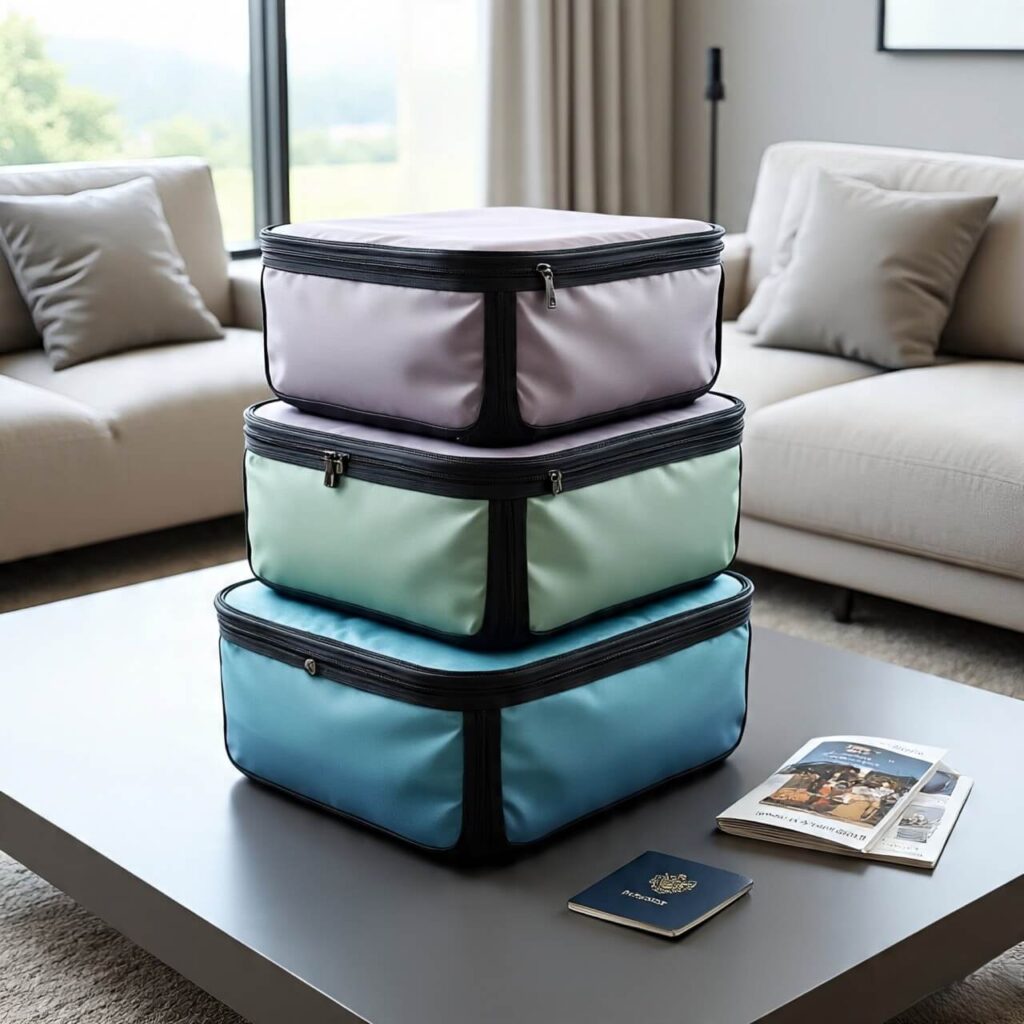
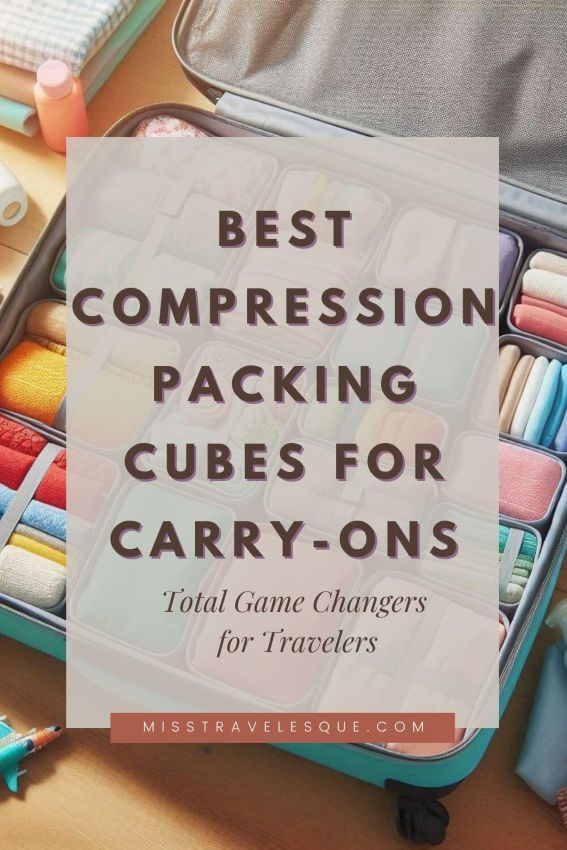
Have you ever tried stuffing your carry on to the brim, only to realize you can’t even zip it up without sacrificing a shoe or two? Or worse, you open it at your destination and you look like you’ve been attacked by a clothing avalanche. Enter: compression packing cubes for carry-on luggage. These magical little organizers can shrink your clothes, keep them neat, and make your carry on feel like Mary Poppins’s bag (without the umbrella). In this post I’ll walk you through everything you need to know — what they are, why they help (and when they don’t), how to pick the right ones, and of course some of the best options you can actually buy right now.
Let’s get compressing.
This post may contain affiliate links that may earn me a commission, at no additional cost to you, if you buy via them. As an Amazon Associate, I earn from qualifying purchases. Please see our Disclosure for more info.
What Are Compression Packing Cubes (Seriously, What’s the Difference?)
First, a quick baseline—if you already know what packing cubes are, bear with me:
- Packing cube (regular): A pouch or box-shaped organizer that keeps your clothes grouped (e.g. shirts, socks, underwear) so you’re not digging through your whole bag.
- Compression packing cube: Just like a packing cube, but with an extra zipper, strap, or mechanism that “compresses” the cube to reduce its volume (squishing air out or flattening folds).
So the key feature is this ability to shrink after you fill it. Think of it as your clothes doing a little breathe-in trick so they take up less space.
In practice, how much space you save depends a lot on what’s inside. A T-shirt or synthetic mix shirt might compress well; a bulkier sweater or jeans, not so much.
Related Read: Packing Cubes for Women – The Ultimate Guide to Traveling Smarter, Packing Prettier
Why Compression Packing Cubes Are Especially Useful for Carry On
You might be thinking: “Do I need this extra step just to travel lighter?” The answer: maybe not always, but they can make a carry on life a lot smoother. Here’s why:
- Maximize limited real estate
Every cubic inch in a carry on matters. If your carry on’s size limit is, say, 22 × 14 × 9 inches, you want every inch working for you. - Better organization + faster unpacking
Instead of one big mass of clothing, you have mini “zones” inside your bag. Find that shirt faster, don’t cause a landslide when you dig. - Reduce shifting
Because the cubes are compressed, there’s less room for clothes to move. Less wrinkling, fewer surprises when you open. - Flexible packing combinations
You can mix compressed cubes, flat compartments, and even roll in empty pockets for shoes or gadgets. - Double duty (sometimes)
Even when you can’t compress (e.g. with stiff fabrics), many people still use these cubes just for organization.
But — yes, there are caveats:
- Some cubes get lumpy in the middle if overloaded.
- Cheap fabrics or zippers may fail over time, especially when compressed repeatedly.
- Overcompression can overstrain seams or make it harder to unzip mid-trip.
So they’re not magic—but they’re damn close when used smartly.
How to Choose the Right Compression Packing Cubes for Carry On
Here are the key features and trade-offs to look for, especially with carry on in mind.
| Feature | Why It Matters | What to Aim For |
|---|---|---|
| Weight | Every gram counts in carry on limits | Lightweight materials like ripstop nylon or thin polyester |
| Durable Zippers | The compression zipper is under stress | Prefer YKK or well-known zipper brands |
| Compression Mechanism | How they squish the cube | Dual-zipper systems or buckle/strap systems |
| Shape / Dimensions | Must fit your carry on’s interior | Cubes that “nest” or match carry on compartment dimensions |
| Mesh / Window Panel | To see what’s inside | Semi-transparent or mesh windows are helpful (but not required) |
| Stitching & Seams | Weak points often fail first | Reinforced seams, bar tack stitching, etc. |
| Expandability (Optional) | Some cubes let you expand when not fully stuffed | Gives flexibility when your load changes |
Also: aim for a set with varying sizes rather than just one. That way you can mix and match depending on trip length.
Top Compression Packing Cubes to Try (that Actually Work)
Here are some excellent options you can order now. These tend to be well-reviewed, available in many markets, and suitable for carry on use. (Yes, I did my homework.)
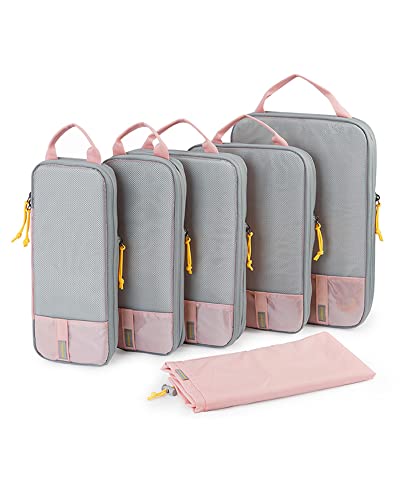
1. BAGSMART Compression Packing Cubes (6‑piece)
Great set with multiple sizes and includes a shoe pouch.

2. 4‑pcs Compression Packing Cubes
More compact set, useful if you don’t need all six. Good for short trips or minimalist packing.

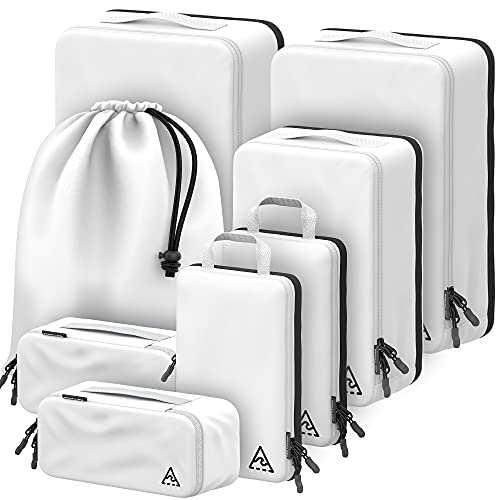
3. 8pcs Expandable Compression Packing Cube Set
More variety, more flexibility — though for carry on I might not use all eight pieces in every trip.
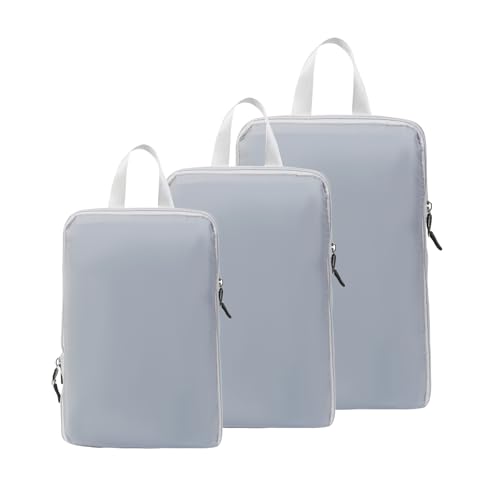
4. 3pc Compressible Packing Cube Set
A minimal set — useful if you just want a starter kit or travel light.
Tips & Best Practices for Using Compression Cubes in Carry On
To make the most of your compression cubes, here are some hacks, mistakes to avoid, and testing tricks:
Smart Packing Tips
- Roll, don’t fold (or do a mix): Roll thinner items; fold bulkier ones. Arrange to minimize empty air pockets.
- Stagger fill levels: Avoid filling all cubes to max; leave a little headspace so compression works better.
- Use modular logic: e.g. tops in one cube, undergarments in one, bottoms in another.
- Balance load: Keep the cubes distributed so your carry on doesn’t tip over.
- Label or color-code: Use distinct colors (if your set has them) so you know exactly which cube has what.
- Test at home: Before your trip, pack a dry run. See how compressed they get, how easy to unzip, whether anything bulges.
What to Avoid
- Overstuffing cubes (that’s defeating the compression purpose).
- Forcing compression if the zippers strain — that can damage seams.
- Cheap materials/cheap zippers (they’re the weak links).
- Using only very rigid items (those are poor compressors).
Final Thoughts
If you travel often with just a carry on, compression packing cubes can transform how much you pack — and how neatly. They’re not miracle workers, but when you mix smart packing technique, decent quality cubes, and a carry on that’s well laid out, you can squeeze more, stress less, and probably avoid that “did I forget something?” panic at 30,000 feet.
📌 Pin to Save 📌
Follow me on:



Leave a Reply