Planning a European getaway in January? January can be a wonderful time to explore Europe, especially if you enjoy crisp winter weather, cozy cafés, festive leftovers, and fewer crowds in many destinations. The catch? You need to dress for the weather.
The best Europe in January travel outfits are warm, comfortable, practical, and easy to layer. You may spend the morning walking through chilly streets, duck into a heated museum at lunchtime, then find yourself outside again after sunset. Your outfit needs to handle all of that without turning your suitcase into a small clothing warehouse.
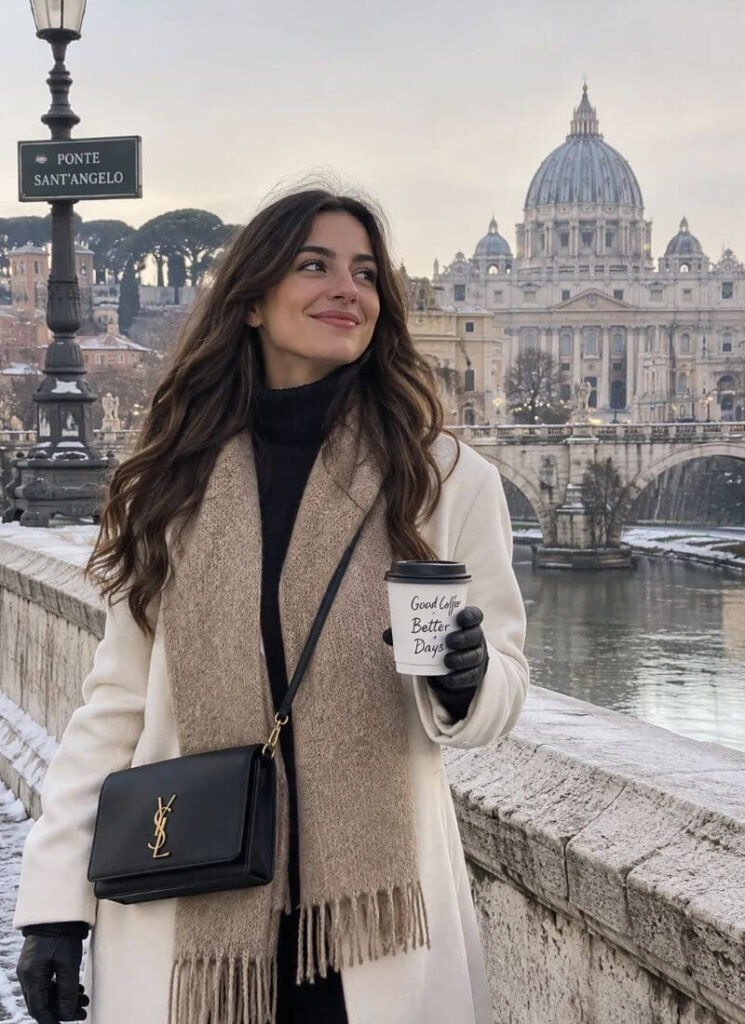
Here are some stylish and practical outfit ideas for traveling around Europe in January.
This post may contain affiliate links that may earn me a commission, at no additional cost to you, if you buy via them. As an Amazon Associate, I earn from qualifying purchases. Please see our Disclosure for more info.
What Is the Weather Like in Europe in January?
January is winter across Europe, but temperatures vary considerably depending on where you go.
Northern and Central European destinations can be very cold, with freezing temperatures and snow possible in some areas. Cities such as Paris, Amsterdam, Berlin, Prague, Vienna, and Budapest can have cold, damp winter days. Southern destinations such as Lisbon, Barcelona, Rome, and Athens are generally milder, although January can still bring chilly mornings, rain, and cool evenings.
Because European winter weather can change throughout the day, layering is one of the smartest things you can do.
A good January travel wardrobe usually includes a warm outer layer, sweaters or fleece layers, long-sleeved tops, comfortable pants, warm socks, and weather-appropriate shoes.
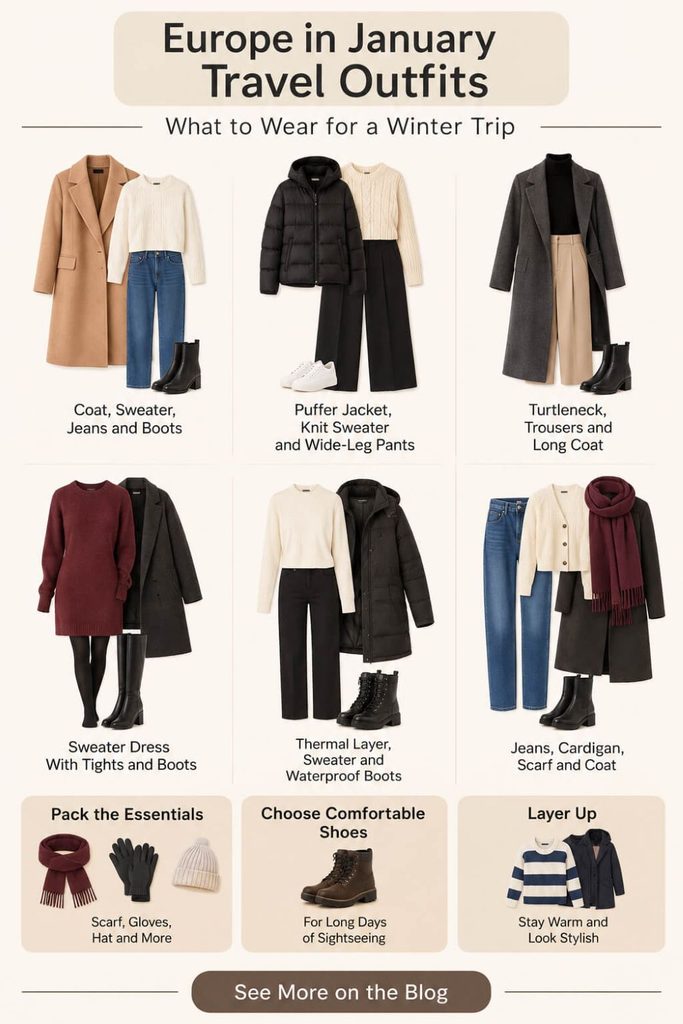
1. Wool Coat, Sweater, Jeans, and Ankle Boots
For a classic city-travel look, start with a warm wool or wool-blend coat.
Add a cozy sweater, straight-leg or slim jeans, and ankle boots. This combination works particularly well for sightseeing in cities where you want to look polished without sacrificing comfort.
Choose a neutral coat in black, camel, gray, navy, or brown. It will work with almost everything else in your suitcase.
For extra warmth, wear a thermal or fitted long-sleeve top underneath your sweater.
2. Puffer Jacket, Knit Sweater, and Wide-Leg Pants
If you are heading somewhere particularly cold, a puffer jacket is your friend.
Pair a warm puffer with a chunky knit sweater and wide-leg trousers. Add insulated socks and comfortable walking shoes or winter boots.
A puffer jacket can be especially useful for long days outdoors because it provides warmth without requiring several bulky sweaters underneath.
And yes, it may make you look like a fashionable marshmallow. That is perfectly acceptable in January.
3. Turtleneck, Trousers, and Long Coat
A turtleneck is one of the most useful pieces to pack for Europe in January.
Wear one with tailored trousers and a long coat for a simple outfit that looks put together while keeping you warm. Add loafers if the weather is mild and dry, or ankle boots when you need more protection from cold and wet streets.
This outfit is particularly nice for dinners, museums, cafés, and other occasions where you want something a little more polished than jeans.
4. Sweater Dress With Tights and Boots
You do not have to abandon dresses just because it is January.
A sweater dress worn with opaque tights and knee-high or ankle boots can make a comfortable winter sightseeing outfit. Add a long coat and scarf for extra warmth.
If temperatures are particularly low, consider wearing thermal tights underneath your regular tights or adding a thin base layer under the dress.
Choose a dress that allows you to walk comfortably. Your feet will have opinions after several hours of sightseeing.
5. Thermal Base Layer, Sweater, and Waterproof Boots
For colder destinations, start with a thermal base layer.
Wear a long-sleeved thermal top underneath a sweater, then add a warm coat or puffer. Pair the outfit with trousers and waterproof or water-resistant boots.
This combination is especially useful when you expect rain, snow, or damp conditions.
Keeping your feet warm and dry can make a surprisingly big difference when you are spending hours exploring a city on foot.
6. Jeans, Cardigan, Scarf, and Winter Coat
For a relaxed everyday look, you cannot go wrong with jeans and layers.
Wear a long-sleeved top with a cardigan or sweater, then add your winter coat and a large scarf. Finish with comfortable boots or supportive walking shoes.
This is one of the easiest Europe in January travel outfits to recreate because the individual pieces can be mixed and matched throughout your trip.
Pack two or three tops and a couple of sweaters in complementary colors, and you can create several different combinations without bringing your entire closet.
7. Monochrome Winter Outfit
Want your winter travel wardrobe to look effortlessly chic? Try a monochrome outfit.
Wear several pieces in the same color family, such as black trousers, a charcoal sweater, a gray coat, and black boots. You can also try shades of cream, beige, brown, or navy.
Monochrome outfits are particularly useful for travel because they make mixing and matching easier. They also photograph nicely against European city streets, which is a nice little bonus.
8. Leggings With an Oversized Sweater and Long Coat
For travel days, comfort is important.
Wear thick leggings with an oversized sweater, a long coat, and comfortable boots. If you are taking a train or spending several hours traveling between cities, this combination gives you plenty of freedom to move around.
Choose thicker leggings rather than very lightweight styles, particularly if you are traveling somewhere cold.
A long scarf can add another layer of warmth without taking up much suitcase space.
9. Warm Accessories Make a Huge Difference
When planning Europe in January travel outfits, do not focus only on coats and sweaters.
Accessories can make your outfits much warmer.
Pack:
- A warm scarf
- Wool or thermal socks
- Gloves
- A beanie or other warm hat
- A compact umbrella
- Sunglasses
- A crossbody bag or small backpack
A scarf is especially useful because you can add or remove it throughout the day. Gloves and a hat are also worth having if you will spend long periods outdoors.
How Many Winter Clothes Should You Pack for Europe?
You do not necessarily need a separate outfit for every day.
Instead, create a small winter capsule wardrobe with pieces that work together. For example, you could pack one warm coat, one lighter jacket if space allows, two or three sweaters, several long-sleeved tops, two or three pairs of trousers, one dress, comfortable boots, and a pair of weather-appropriate walking shoes.
Stick to a simple color palette so that your pieces coordinate easily.
Remember that coats, sweaters, and boots take up valuable luggage space. Wearing your bulkiest items during travel can free up room in your suitcase.
What Shoes Should You Wear in Europe in January?
Comfortable footwear should be a priority.
You may walk much more than you expect, especially when sightseeing in historic city centers. Look for shoes with good support and sufficient grip for potentially wet or slippery surfaces.
For colder destinations, insulated or waterproof winter boots can be useful. In milder cities, comfortable leather or weather-resistant ankle boots may be enough.
Before your trip, wear your shoes around home so you know they are comfortable. January in Europe is not the ideal time to discover that your brand-new boots have a personal vendetta against your heels.
Final Tips for Dressing in Europe in January
The secret to great Europe in January travel outfits is layering.
Start with a comfortable base layer, add a sweater or cardigan, and finish with a warm coat. Choose practical shoes, bring warm accessories, and consider the specific weather conditions of every destination on your itinerary.
Most importantly, leave a little room in your suitcase. You never know when you might find a beautiful scarf, sweater, or winter accessory that suddenly becomes an essential souvenir.
With the right layers and a few versatile pieces, you can stay warm, comfortable, and stylish while exploring Europe in January.
Follow me on:





Leave a Reply