Europe in February Outfits: What to Wear and What to Pack
Planning a European getaway in February? Your suitcase is about to meet its greatest challenge: looking stylish while keeping you warm enough to enjoy the trip.
February is winter across most of Europe, so Europe in February outfits need to focus on warmth, layering, comfortable shoes, and pieces that can handle changing weather. The exact conditions vary considerably depending on where you go. Northern Europe can be very cold, while southern destinations such as Portugal, Spain, Italy, and Greece can be milder.
The good news is that you do not need to pack your entire wardrobe. A small collection of versatile layers can create plenty of outfits for sightseeing, restaurants, museums, and evenings out.
This post may contain affiliate links that may earn me a commission, at no additional cost to you, if you buy via them. As an Amazon Associate, I earn from qualifying purchases. Please see our Disclosure for more info.
What Is the Weather Like in Europe in February?
February is generally a cold month in Europe, but there is no single “European winter” temperature. Weather depends heavily on your destination.
Cities in northern and central Europe can experience freezing temperatures, snow, icy conditions, and chilly winds. Southern Europe is often milder, although rain, wind, and cool evenings are still possible.
This makes layering particularly useful. You can add or remove pieces throughout the day without turning your suitcase into a portable department store.
Before your trip, check the weather forecast for each destination and pack accordingly.
What to Wear in Europe in February
1. A Warm Winter Coat
A good coat should be the foundation of your Europe in February outfits.
For colder destinations, consider a wool coat, insulated winter coat, or a warm puffer. If you are visiting milder areas, a medium-weight wool coat or insulated jacket may be enough.
Choose a neutral color such as black, camel, gray, navy, or beige so it works with everything else in your suitcase.
If your trip involves a lot of walking, avoid bringing a coat that looks fabulous but makes you feel like you are carrying a small sofa on your shoulders.
2. Sweaters and Knitwear
Pack several warm sweaters that work over your basic tops.
Wool, merino wool, cashmere, and other insulating fabrics can be useful for cold-weather travel. A chunky sweater is cozy, while a finer knit is easier to layer underneath a coat.
Neutral sweaters are especially practical because they can be paired with different trousers and skirts.
3. Thermal or Base Layers
Thermal tops can make a huge difference if you are visiting a particularly cold destination.
A lightweight thermal top can sit underneath a sweater without adding much bulk. Thermal leggings can also be useful under trousers on especially chilly days.
They are easy to pack, easy to layer, and considerably less glamorous than a silk blouse, but your body will probably appreciate them more.
4. Jeans or Warm Trousers
A couple of pairs of comfortable jeans are useful for casual sightseeing. Straight-leg, wide-leg, or slim styles can all work, depending on your preference.
For colder destinations, consider adding trousers made from heavier fabric. You can also wear thermal leggings underneath if necessary.
Avoid bringing too many pairs of trousers. They take up valuable suitcase space, and you can easily create several outfits from two or three versatile pairs.
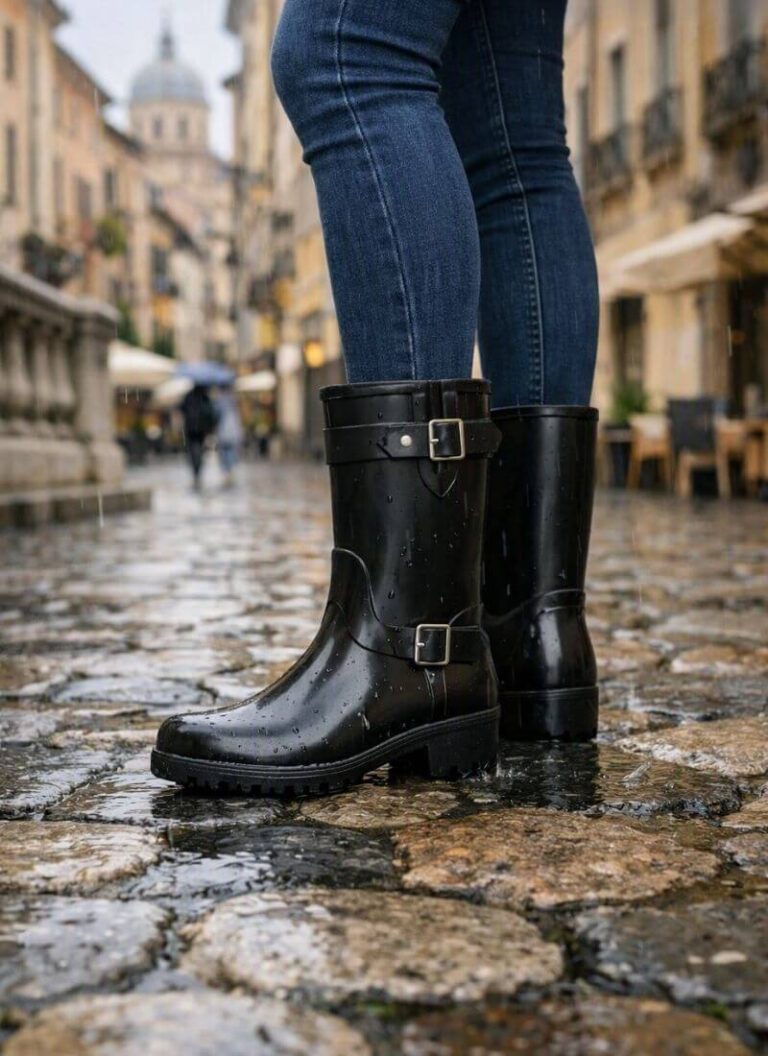
5. Comfortable Waterproof Shoes
This is one of the most important parts of your Europe in February outfits.
European city trips often involve plenty of walking, and February can bring rain, snow, slush, and wet pavement. Comfortable ankle boots, waterproof sneakers, or other weather-resistant walking shoes can be excellent choices.
If you plan to visit snowy areas, make sure your shoes have good traction and provide enough insulation.
Your feet will be doing a lot of sightseeing too. Treat them accordingly.
6. Warm Socks
Do not underestimate a good pair of socks.
Wool or thermal socks can help keep your feet warm, particularly when you are spending hours outdoors. Pack enough for your trip, plus a couple of extras in case your shoes encounter some unfortunate European puddle.
7. Scarves, Gloves, and a Hat
Winter accessories are both practical and useful for changing up your outfits.
Pack a warm scarf, gloves, and a beanie or other winter hat if you are visiting a cold destination. A scarf can also add color and personality to a neutral coat.
These smaller accessories take up much less space than additional clothing, making them an easy way to vary your travel wardrobe.
Europe in February Outfit Ideas
Need some inspiration? Here are a few easy combinations.
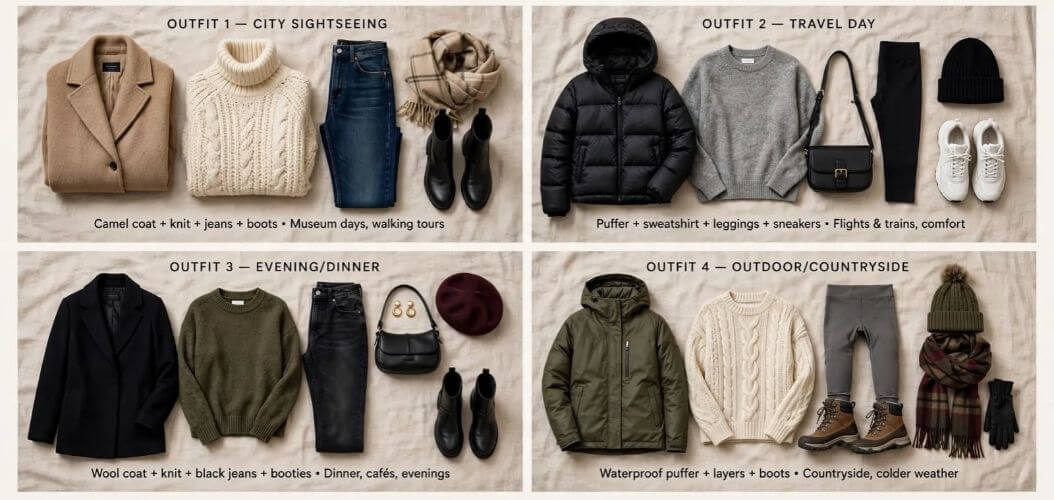
Classic sightseeing outfit:
Wool coat, sweater, straight-leg jeans, ankle boots, scarf, and crossbody bag.
Casual city outfit:
Puffer jacket, thermal top, knit sweater, comfortable trousers, waterproof sneakers, and a beanie.
Dinner outfit:
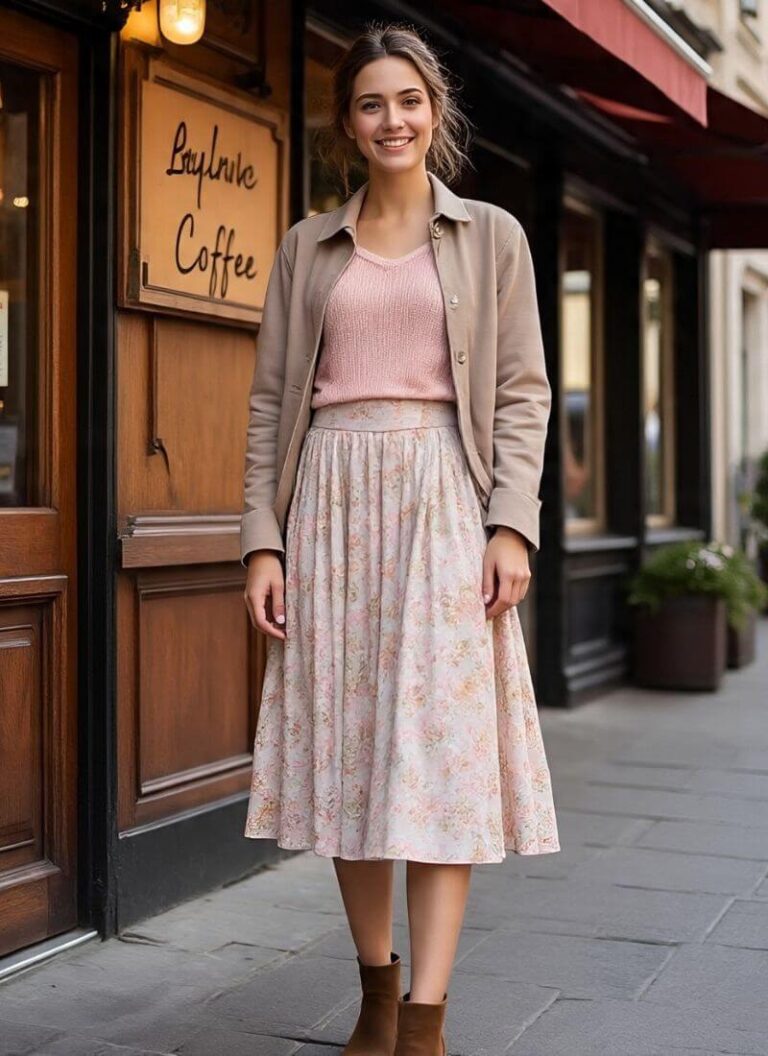
Wool coat, fine-knit sweater, black trousers or a midi skirt, ankle boots, and simple jewelry.
Milder-weather outfit:
Medium-weight coat, lightweight sweater, jeans, loafers or ankle boots, and a scarf.
Very cold-weather outfit:
Insulated coat, thermal base layer, warm sweater, lined trousers, wool socks, insulated boots, gloves, scarf, and hat.
The key is to build outfits around layers so you can adjust to changing temperatures throughout the day.
Europe in February Packing List
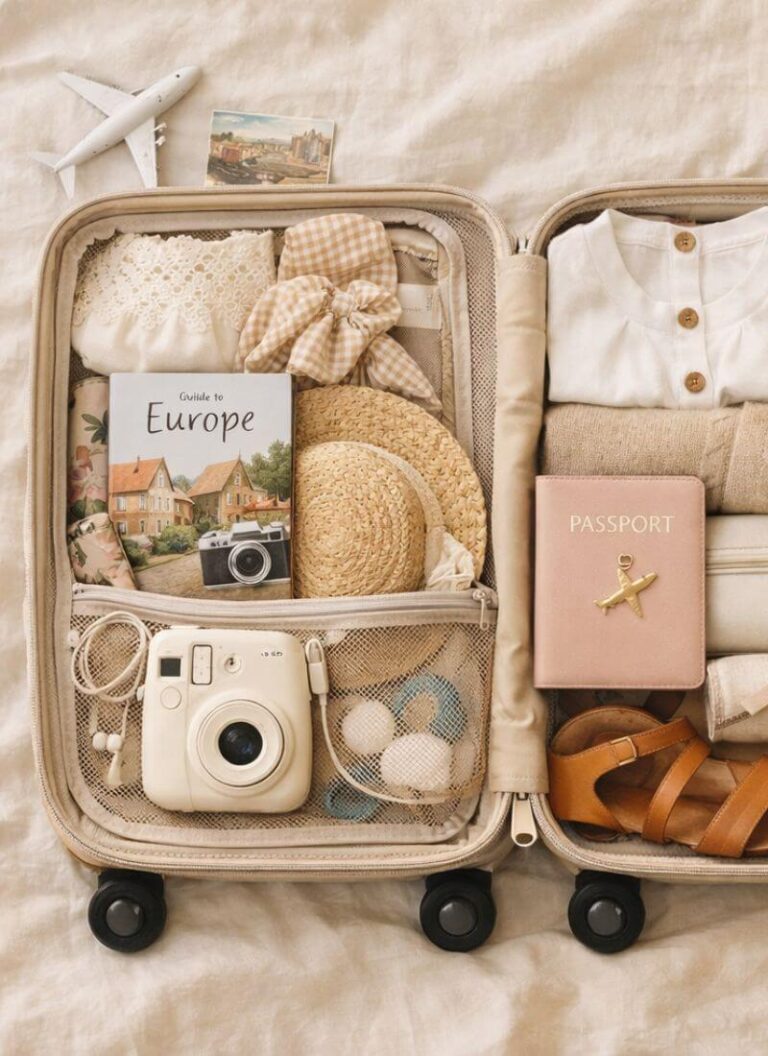
Here is a practical starting point for a one-week winter trip. Adjust it based on your destination, activities, and access to laundry.
Clothing
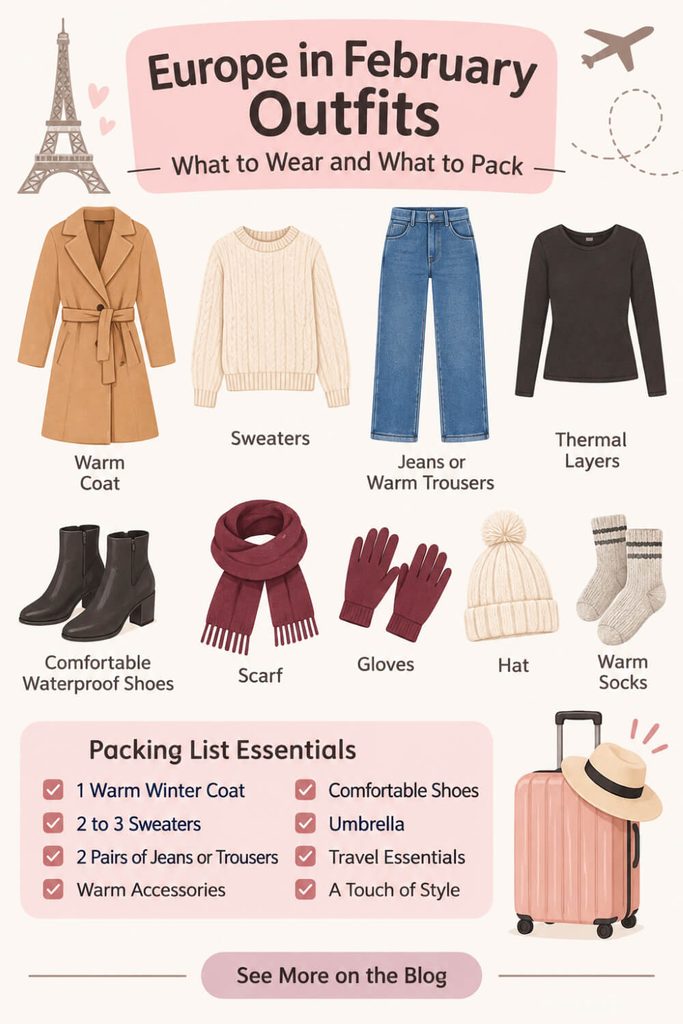
- 1 warm winter coat
- 2 to 3 sweaters
- 2 to 3 long-sleeved tops
- 1 to 2 thermal tops
- 2 pairs of jeans or trousers
- 1 pair of comfortable dressier trousers or a skirt
- 1 casual or dinner outfit
- 1 to 2 thermal leggings, if needed
- 7 pairs of underwear
- 7 pairs of socks
- 1 to 2 pairs of warm or wool socks
- Sleepwear
Shoes
- 1 pair of comfortable waterproof walking shoes or boots
- 1 additional pair of comfortable shoes, depending on your itinerary
Winter Accessories
- Warm scarf
- Gloves
- Beanie or winter hat
- Sunglasses
- Compact umbrella
Travel Essentials
- Crossbody or anti-theft bag
- Small daypack, if useful
- Travel-size toiletries
- Travel adapter appropriate for your destinations
- Reusable water bottle
- Portable charger
- Any necessary medications
- Copies or digital backups of important travel documents
Tips for Packing for Europe in February
The smartest Europe in February outfits are built around pieces that can be mixed and matched.
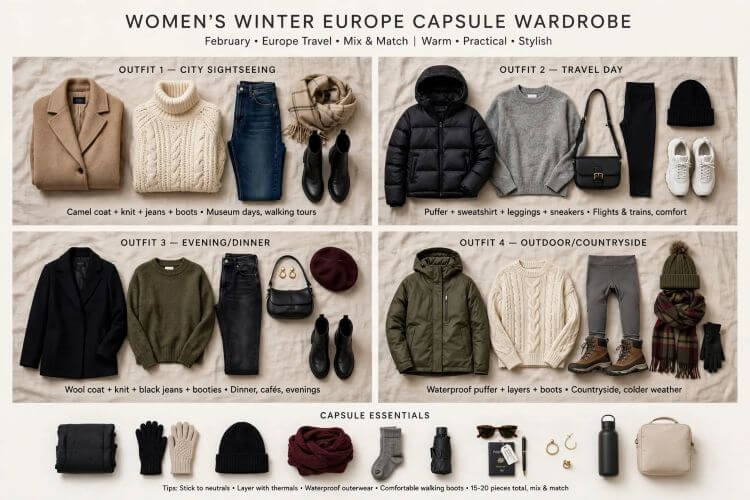
Stick to a simple color palette so your sweaters, trousers, coats, and accessories work together. For example, black, cream, camel, gray, navy, and burgundy can create plenty of combinations without requiring a suitcase packed to the zipper.
Wear your bulkiest shoes and coat while traveling whenever practical. Pack lightweight layers rather than multiple heavy sweaters.
Most importantly, think about your itinerary. A February trip centered around museums, restaurants, and city sightseeing requires different clothing from a ski holiday or a countryside escape.
Final Thoughts
Putting together Europe in February outfits is really about smart layering. Start with comfortable basics, add warm knitwear, finish with a weather-appropriate coat, and keep your feet happy with comfortable shoes.
A well-planned February travel wardrobe can be warm, practical, and stylish without taking up your entire suitcase. And considering how much walking you may do, comfortable shoes might just become the most important fashion decision of the entire trip.
📌 Pin to Save 📌
Follow me on: