If you have ever googled “Best Time to Visit Europe,” you have probably seen dreamy summer photos of cobblestone streets glowing in golden light, café tables spilling into lively squares, and pastel houses shining under blue skies. It looks magical. It is also expensive.
If your heart belongs to charming European towns, the kind with church bells, local bakeries, and medieval streets, then timing your trip correctly can save you hundreds, sometimes thousands, of dollars.
So let’s talk about the real best time to visit Europe if your goal is saving money while still soaking up all that old world charm.
Why Timing Matters When Visiting European Towns
Flights, accommodation, and even attraction prices in Europe fluctuate depending on the season. The difference between peak and shoulder season can be dramatic.
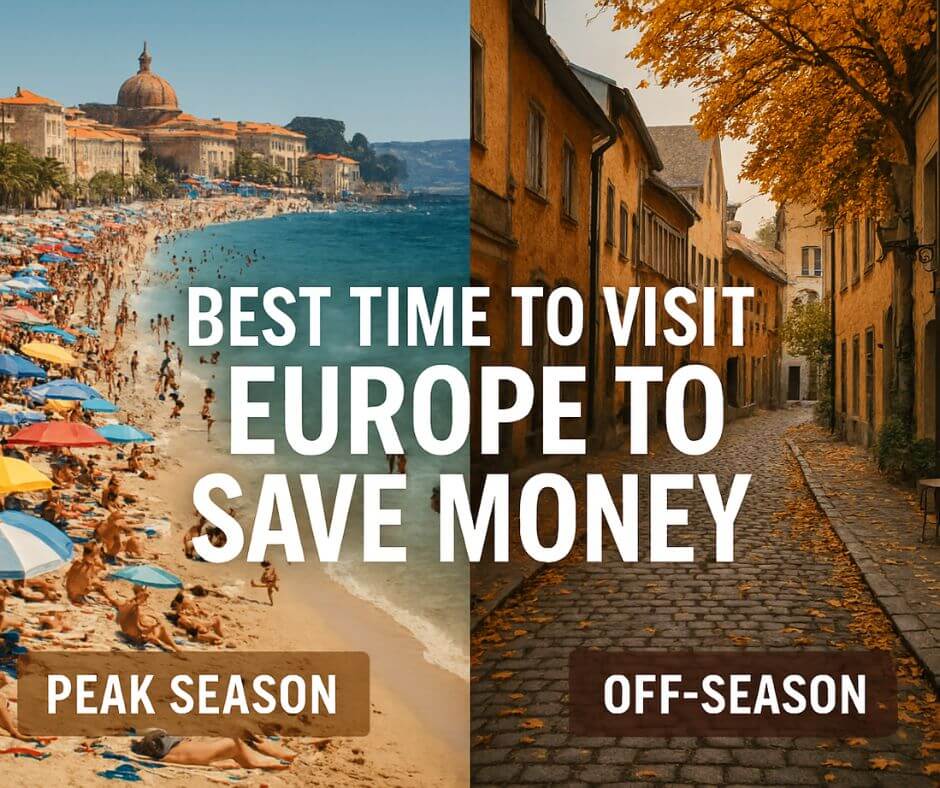
Summer, especially June through August, is considered high season across much of Europe. Popular towns in countries like Italy, France, Spain, Portugal, Germany, and the United Kingdom see the highest demand during this period. That means higher hotel rates, crowded streets, and pricier flights.
If you are focused on the best time to visit Europe on a budget, summer is usually not it.
Instead, you want to think shoulder season and sometimes even low season.
The Best Time to Visit Europe to Save Money
In general, the best time to visit Europe for lower prices is during:
- Late March to May, excluding Easter week
- September to early November
- January to early March, depending on the destination
These periods are considered shoulder or low season in many European destinations. Flights are often cheaper, hotel rates drop, and you can enjoy famous towns without feeling like you are part of a slow moving parade.
Now let’s break it down season by season.
Spring, March to May, Budget Friendly and Blooming
Spring is one of the best times to visit Europe if you want a balance between good weather and lower prices.
Why Spring Is Budget Smart
- Flights are generally cheaper than in summer.
- Hotels in smaller towns often offer better availability and lower nightly rates.
- Attractions are open, but lines are shorter.
- Restaurants and cafés are less crowded, so you can linger longer.
In Southern Europe, places like Tuscany in Italy or Andalusia in Spain start warming up by April. Northern Europe, such as small towns in Germany or the United Kingdom, can still be chilly in March, but by May the weather is pleasant.
One thing to note, Easter can drive prices up in many European countries, especially in Catholic regions. Check the calendar before booking.
If you love flowers, mild temperatures, and reasonable hotel prices, spring might quietly be the best time to visit Europe for you.
Fall, September to Early November, The Sweet Spot
If you ask frequent travelers about the best time to visit Europe to save money, many will whisper one word: fall.
September is technically still busy in major cities, but by late September and October, things start to calm down. Kids are back in school, and tourist numbers drop significantly in many small towns.
Why Fall Is Ideal for Budget Travelers
- Accommodation prices drop after the summer rush.
- Flights become more affordable compared to peak season.
- Weather in Southern and Central Europe remains pleasant.
- Harvest season means local food festivals and fresh produce.
In places like Provence in France or the Cotswolds in England, fall brings golden fields and cozy vibes without peak summer prices.
For Mediterranean towns in Italy, Spain, and Portugal, September and early October often offer warm days, fewer crowds, and lower hotel rates compared to July and August.
If you want the best time to visit Europe with a calm atmosphere and reasonable prices, early fall is hard to beat.
Winter, January to Early March, The Cheapest Option
Winter is often the cheapest time to visit Europe, especially after the Christmas and New Year holidays.
From mid January through early March, tourism slows down in many European towns, particularly those that are not ski destinations.
What to Expect in Winter
- Lower hotel prices, sometimes significantly lower.
- Fewer tourists, meaning peaceful streets and easier reservations.
- Colder weather, especially in Central and Northern Europe.
- Shorter daylight hours.
Southern European towns, such as those in southern Spain or southern Italy, have milder winters compared to northern destinations. You will not get beach weather, but you will get empty plazas and local life at a slower pace.
Keep in mind that some small attractions in very tiny towns may have limited hours during low season. Always check opening times before planning your itinerary.
If you are okay with packing a good coat, winter can easily be the best time to visit Europe for maximum savings.
When to Avoid If You Want to Save Money
If your goal is strictly budget travel, these periods are typically the most expensive:
- Late June through August
- Christmas and New Year holidays
- Major local festivals and public holidays
Summer is peak season across most of Europe. Coastal towns in countries like Italy, Spain, Portugal, and France see prices soar. Even small inland towns experience higher demand because of European school holidays.
December can also be pricey in cities famous for Christmas markets, especially in Germany, Austria, and parts of France.
The key to finding the best time to visit Europe is knowing that what looks magical on Instagram often comes with a premium price tag.
How to Save Even More When Visiting European Towns
Timing is important, but a few smart strategies can stretch your budget even further.
Book Flights Early
For international travel, booking several months in advance usually offers better prices than waiting until the last minute. Use flexible date searches to compare prices around your preferred travel window.
Stay Midweek
In many European towns, weekend rates can be higher than weekday rates. If your schedule allows, consider Sunday through Thursday stays.
Choose Smaller Towns Over Major Cities
Accommodation in small towns is often more affordable than in major capitals. Staying in a town outside a big city and taking a short train ride in can save you money and give you a more authentic experience.
Travel Outside School Holidays
European school holidays, especially in summer, increase demand across popular destinations. If you can travel in late April, May, September, or October, you often get better deals.
So, What Is the Best Time to Visit Europe?
If you are focused on saving money while enjoying beautiful European towns, the best time to visit Europe is typically during the shoulder seasons of spring and fall.
Late April to early June and September to October often offer the best balance of reasonable prices, pleasant weather, and manageable crowds.
If your top priority is the lowest possible cost and you do not mind colder weather, January through early March can offer the biggest savings.
Europe is charming year round. The difference is how much you pay for that charm.
Plan smart, travel slightly off peak, and you can stroll through cobblestone streets, sip coffee in a quiet square, and enjoy those postcard views without feeling like your bank account just went on its own dramatic European adventure.
📌 Pin to Save 📌
Follow me on:





Leave a Reply